
Rain in Northern California can arrive quickly and affect creeks, roads and neighborhoods differently. Residents need clear local information rather than vague promises that a particular location is safe.
This guide focuses on the choices readers can verify, the mistakes that create unnecessary risk, and the records or instructions worth checking before they act. Details differ by person, location and equipment or legal setting. Use current primary sources for anything that could change after publication.
Understanding Butte County winter flood preparedness before making a decision
Butte County winter flood preparedness should begin before heavy rain reaches a neighborhood. The county’s official flood guidance encourages residents to sign up for emergency alerts, know their evacuation zone, check forecasts and understand road conditions. Those tasks are relevant in urban areas and rural communities, although the hazards differ. A general article cannot predict which individual property will flood during a storm.
Flood preparation differs from wildfire preparation in some practical details, although both depend on clear evacuation information. Water can rise across a road while a nearby neighborhood remains dry. A route that was appropriate for an earlier fire evacuation may be blocked by floodwater. Residents should review the county’s current maps and instructions for the specific incident rather than relying on a single all-hazards shortcut.
Identify the facts and limits first
The county’s Know Your Zone system gives residents a way to identify their evacuation zone. Memorizing the number and saving the map offline can simplify official instructions during a stressful incident. Evacuation zones are planning tools, not forecasts of a particular flood. Always follow real-time orders from the responsible emergency authority.
Properties near rivers, creeks and low-lying roads may face different water behavior from hillsides. Areas affected by earlier wildfires can also have altered runoff conditions. Residents should consult official local flood-risk information and avoid assuming that a home outside an obvious riverbank location has no risk. Terrain, drainage and maintenance vary block by block.
Register and update emergency alert contacts
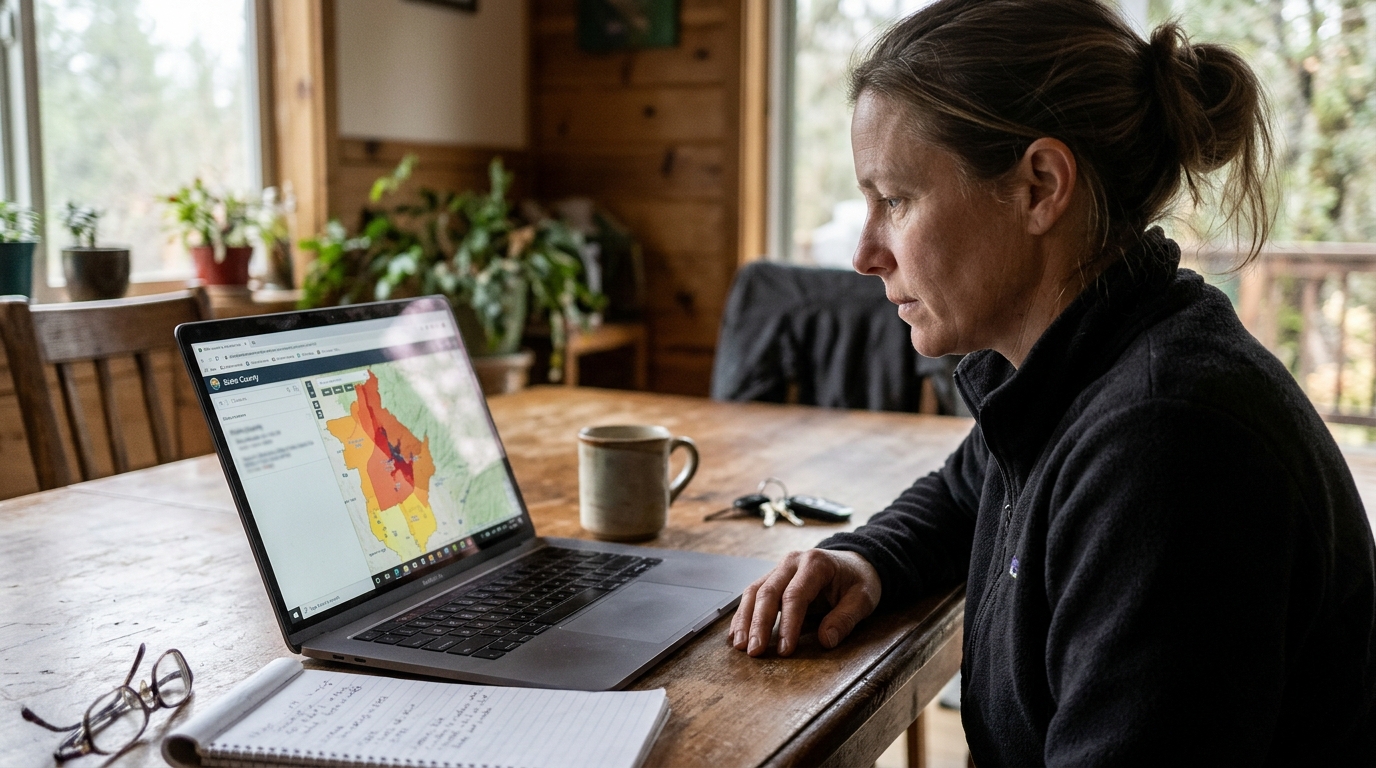
Prepare at least two potential exit routes if local geography permits, but never drive through a flooded road simply because it is the usual way home. Water depth and road damage may be impossible to judge from inside a vehicle. If an official route closes, use directions from local authorities rather than asking a navigation app to invent a shortcut.
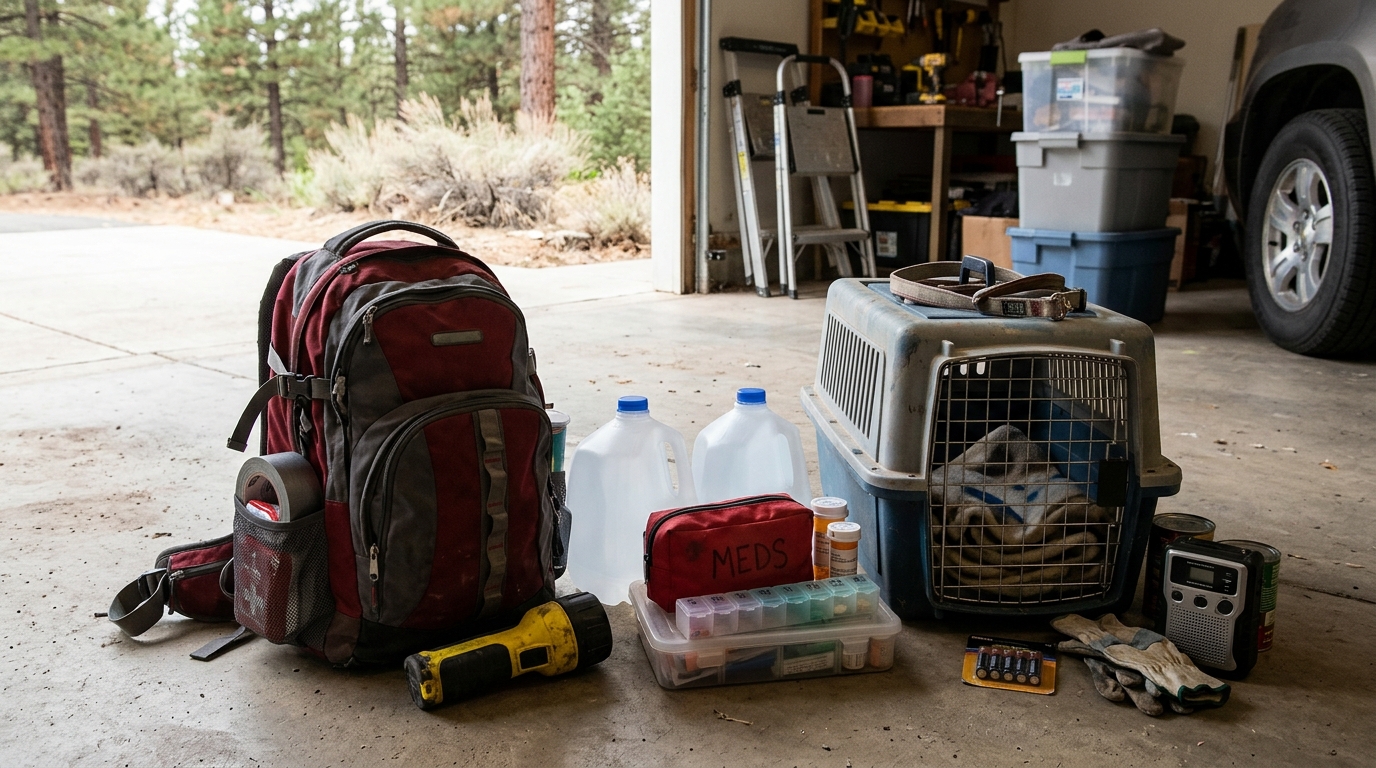
A household with pets should decide how animals will be transported before a warning arrives. Carriers, leashes, medication and a familiar blanket may reduce confusion. Check whether a potential shelter accepts animals and whether alternative arrangements are needed. A plan that assumes everyone can leave quickly may fail when one family member needs extra assistance.
Pack water, medication, lights and key documents
A household emergency kit should match the people who will use it. Include drinking water, food, essential medication, lighting, a battery or charging source and basic documents in a protected format. Families may also need infant supplies, pet carriers or mobility equipment. Preparing these items early is easier than searching for them during an evacuation warning.
Emergency notifications work best when contact details stay updated. Sign up through county-approved systems and verify that each adult knows where alerts will appear. Phone service or power can fail, so establish an additional way to receive news, such as a battery-powered radio or a trusted neighbor plan. Social media posts may lag behind official instructions.
Recognize where assumptions break down
Home preparation should focus on safe, permitted actions. Clear leaves from reachable drains and gutters only when safe, secure loose outdoor items and move valuables away from known low spots. Do not climb onto an unsafe roof or enter flowing water to protect property. Some drainage systems are public infrastructure; report issues through the correct agency instead of attempting unauthorized work.
Sandbags may divert shallow flowing water when positioned correctly, but they are not a guarantee against major flooding. Ask local authorities whether supplies are offered and where residents can obtain them. Do not block public drains or access ramps with improvised barriers. Property measures should always preserve safe evacuation paths.
Power loss can make communication harder than expected. Charge batteries before storms, keep a paper copy of essential phone numbers and know how to find updates without household internet. A vehicle can sometimes offer power, but it should never be operated in an enclosed garage to run electronics. Basic carbon monoxide and electrical safety rules still apply during an emergency.
Practical steps for Butte County winter flood preparedness
Older adults and residents who use medical equipment may need more time and support. Create a contact list with neighbors or family members who can assist, and discuss accessible transportation before an emergency. Protect medical privacy while sharing the information that a helper actually needs. The plan should not depend on one person always being home.
Butte County contains communities with very different road networks. A route that works in Chico may not apply in foothill areas or around Oroville. Locate the official zone and road information for the actual address. Avoid copying last season’s detour into a new article without confirming that it remains suitable.
Evaluate evidence and next steps
After a storm, do not enter a flooded building until it is safe and any utility hazards have been assessed. Photograph damage only when authorized and safe, and preserve insurance and repair records. Contaminated water and electrical equipment can pose hidden risks. Professional help may be needed before cleanup begins.
When checking home drainage, stay within safe and lawful tasks. Residents can remove leaves from accessible areas, but major tree work, flooded electrical panels and blocked public culverts may require professionals or the responsible agency. Report hazards with a location and description rather than putting yourself in danger to fix them during active rain.
Identify safe alternatives and family contact plan
A useful household drill does not need to be elaborate. Check that the family can find its zone, locate keys, load essentials and reach the agreed meeting point. Review what would happen if a school, workplace or medical appointment were part of the day. Practicing choices in calm weather can reduce confusion later.
Follow current orders rather than cached directions
Butte County winter flood preparedness is a practical sequence: know the local risk, receive alerts, plan safe exits and keep essential supplies accessible. Official conditions must override a blog post once a storm begins. The goal is to give households enough information to act early rather than wait for danger to become visible.
The most helpful local flood article is one readers can use before the next storm, not a retrospective list of dramatic images. Include a link to current county flood guidance, explain zones accurately and recommend routine review. Conditions can change rapidly, and no independent blog should claim to be a substitute for emergency alerts or orders.
Practical checklist:
- Locate your official Butte County evacuation zone
- Register and update emergency alert contacts
- Check local flood-risk and road information
- Pack water, medication, lights and key documents
- Identify safe alternatives and family contact plan
- Follow current orders rather than cached directions
Common questions
Does an evacuation-zone map predict exact flooding? No. Zones support planning; current emergency orders and conditions remain decisive.
Is driving through shallow-looking floodwater safe? No. Water can hide damaged roads and unexpected depth or current.
Do sandbags guarantee protection? No. They may help with limited water flow but cannot stop every flood.
How often should a family review its plan? Revisit it before storm season and after major changes to household or contact information.
For related context, see the butte-county-california.com guide. For authoritative reference, review this primary resource and additional official or technical guidance. Verify updates, dates and jurisdiction before applying general guidance to a specific situation.
Use this guide as a starting framework rather than a promise of a particular outcome. For Butte County winter flood preparedness, the most useful next move is to verify the applicable details, preserve accurate information and make a decision based on the real conditions in front of you. When specialist advice, official instructions or a qualified inspection is appropriate, seek that input before a decision becomes difficult to reverse.